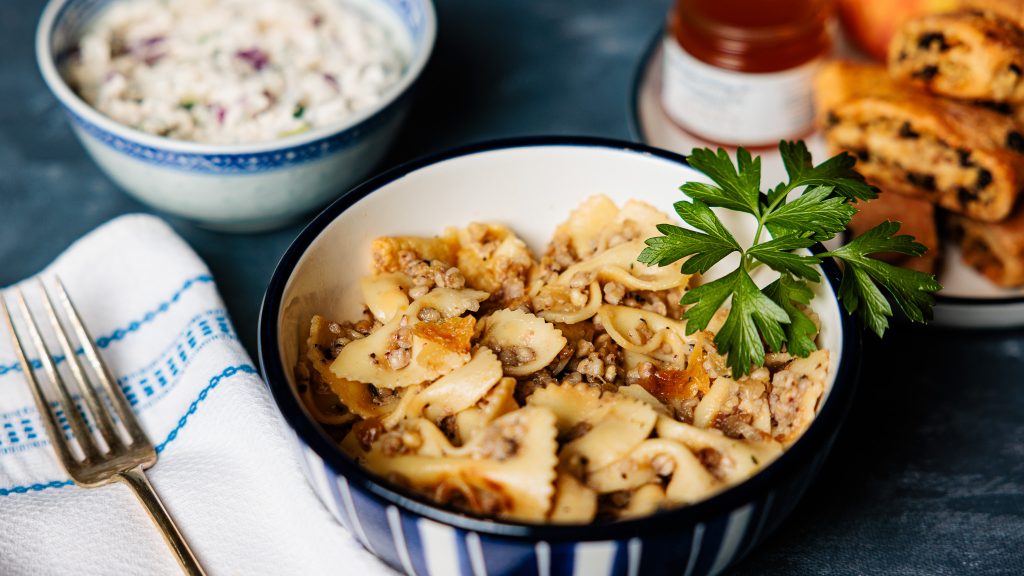
Kasha varnishkes is one of a kind in Ashkenazi Jewish cuisine. While you can find ingredients like egg noodles, root vegetables, or smoked fish repeated across many recipes, the iconic carb-on-carb combination of farfalle pasta and buckwheat groats is unique to this dish. A beloved, anytime comfort food in many Jewish households, we’re excited that this classic dish is making its debut on our Rosh Hashanah menu this year.
What is Kasha Varnishkes, Anyway?
In Eastern European countries like Russia, Ukraine, and Poland, “kasha” can mean any type of grain toasted and cooked into a porridge. In Jewish cuisine, it only means buckwheat. Buckwheat was originally more traditional to China, Japan, and Southeast Asia, before expanding to Eastern Europe. By the 16th century, buckwheat was a staple grain for Northeastern European Jews; it was a forgiving crop that stored well throughout the winter. The origins of kasha varnishkes can be traced to the buckwheat-filled kreplach-style dumplings eaten by Russian and Ukrainian Jews at the time, called kashe varenki. The word varnishkes, used only for this dish and nothing else, is thought to be a Yiddish adaptation of the Ukrainian word varenichki, meaning “stuffed.”
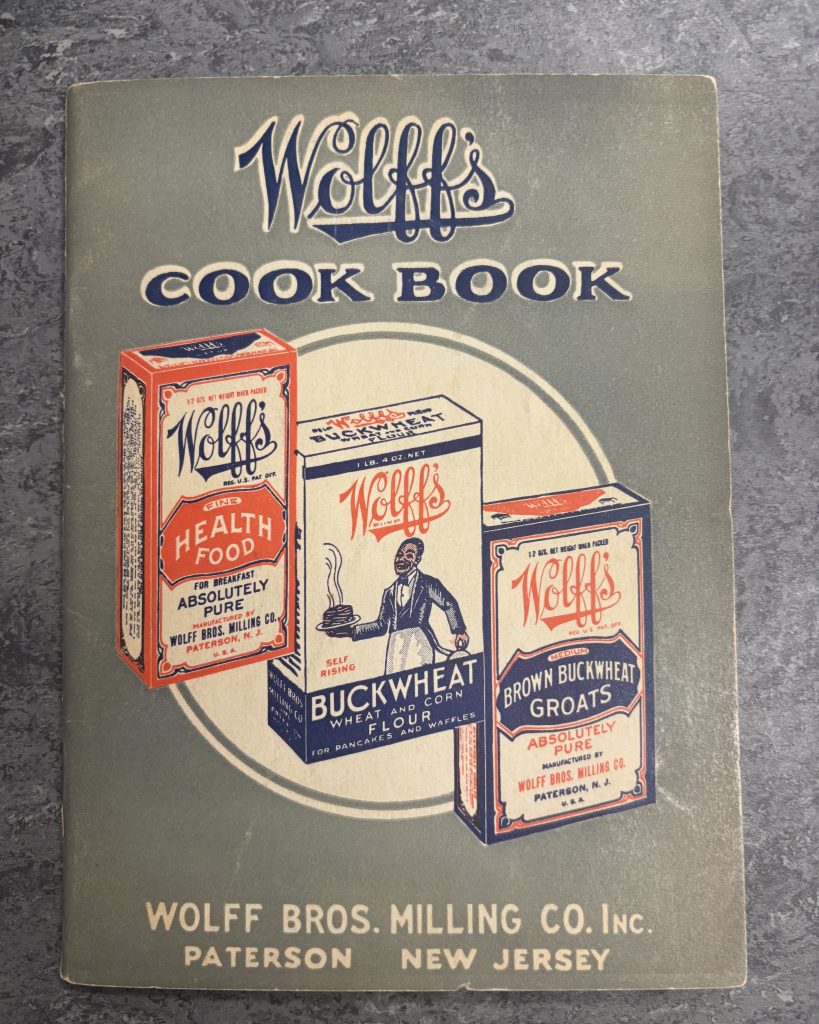
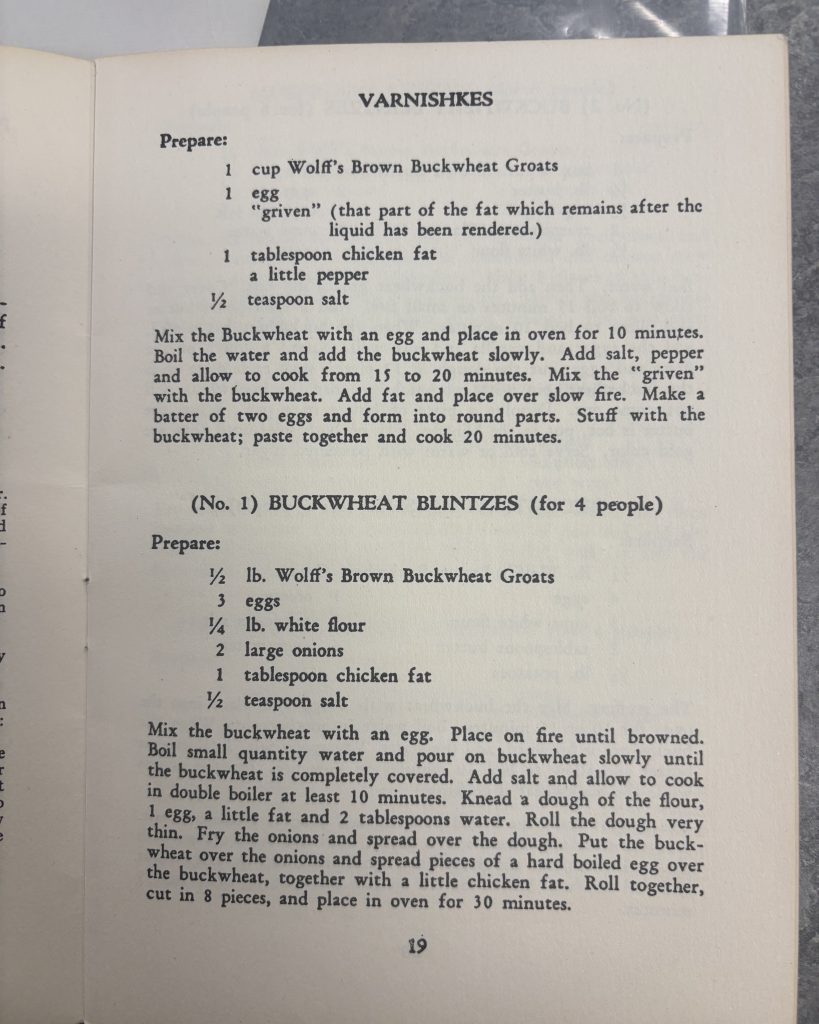
The first record of kasha varnishkes comes from an 1898 play, “Die Mumeh Sosye” (Aunt Soysa), but the first known recipe comes to us over 25 years later in a 1925 Yiddish cookbook from the Wolff Brothers buckwheat milling company, a brand synonymous with all things kasha for many American Jews. (Founded in 1868 and sold to Birkett Mills in the early 20th century, you can still find kasha under the Wolff brand on supermarket shelves today–and is the brand that we’re using in our recipe!) This recipe, however, is closer to the original kashe varenki than it is to the simpler dish of kasha varnishkes. Rather than using egg noodles (lokshen in Yiddish), which were pricey, the recipe called for squares of homemade dough rolled out and pinched in the middle as a more affordable substitute. This shape allowed the homemade noodles to act as scoops for the buckwheat to nestle into. When dried Italian pastas hit the scene as a cheap and readily available pantry staple — and as Jewish and Italian immigrants engaged in cultural exchange in New York — farfalle became the go-to. Caramelized onions also became a common addition; the sweetness of the onion balances the earthy flavors of the kasha and brings moisture to an otherwise dry dish.
A New Addition to Our Catering Menu
Kasha varnishkes has reinvented itself many times, which means there are a lot of ways to make it! One of the more popular ones comes from Joan Nathan in her cookbook, Jewish Cooking in America. But our Chef Wallo wanted to base our recipe off the original one from the Wolff brothers that hadn’t yet been adapted to farfalle pasta. Since we couldn’t find this online, we sent our former Kitchen Manager, now historical archivist, Andrew Wilhelme to the Janice Bluestein Longone Culinary Archive at the University of Michigan, where he was able to track down a 1933 recipe booklet from the Wolffs that included the recipe.
While it would be easy to simply riff off more modern recipes easily accessed online, we’re dedicated to the craft of delivering authentic Ashkenazi Jewish food (and doing a little history deep dive is fun!). After testing the recipe with handmade dough, Chef Wallo opted for the more modern farfalle route with Rustichella pasta, so the dish could hold up to our bulk volume. He used the classic Wolff/Birkett Mills roasted kasha, caramelized onions, and the original fat source of schmaltz over butter (need schmaltz? Just ask!) One more flourish from Chef Wallo: gribenes (crispy chicken skins) for extra flavor and texture. If you can’t tell, we’re pretty excited to have it on our Rosh Hashanah menu this year!