The Deli’s Decades-Long Commitment to Waste Reduction
Road to Sustainability Is Steady, Not Swift
We believe business is a way to do good in the world—so much so that it’s actually written into our guiding principles! We also say that “we leave everyone and everything we interact with better than when we first came into contact—staff, customers, the community, vendors, and the environment.” So while talking about waste reduction efforts perhaps isn’t as flashy as our latest Sandwich of the Month or the exciting events we’ll be hosting soon, our work is guided by documented principles to be mindful of our environmental impact and to take proactive steps to improve; it’s an important part of who we are.
Composting: We Keep Our Side of the Street Clean
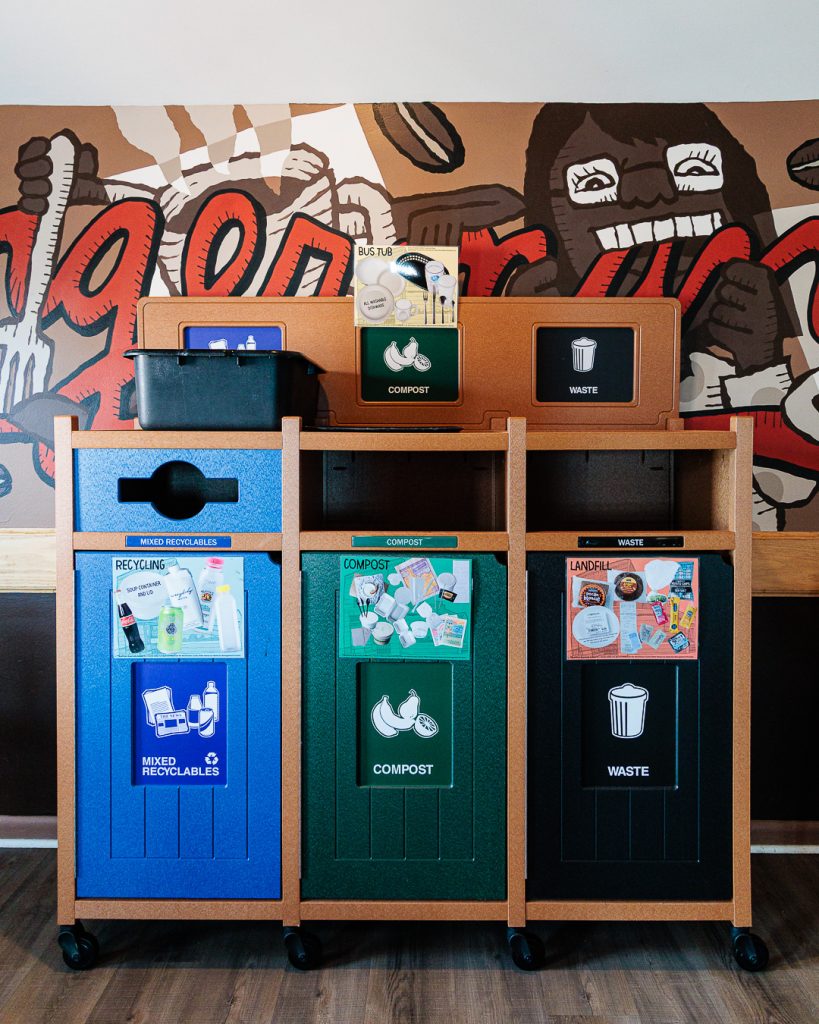
Our most recent change here at the Delicatessen is one you might have already seen for yourself: we’ve introduced composting and recycling bins to all of our dining areas! We’ve had robust compost collection practices in our back of house for over a decade, but bringing it to guest-facing areas was a big change that warranted its own big story. It also warrants a big thanks to Washtenaw County—their Waste Reduction Sponsorship grant helped us procure the proper collection receptacles for all of our dining areas and train our staff on this new aspect of our operations.
That was a really visible change, but it’s just the tip of the iceberg of our efforts to reduce waste. Most of our work happens behind the scenes, and some of it is really hard to quantify. For instance, trying to buy what we need without overbuying, so we don’t create waste in the first place, is a more complex story to try to tell than sharing that our new compost bins are expected to increase our compost diversion by 50% annually. Nevertheless, it’s a vital part of what we do, so we’re sharing a peek behind the curtain to fill you in on our ongoing sustainability strides.
Invisible (Until Now!) Operations
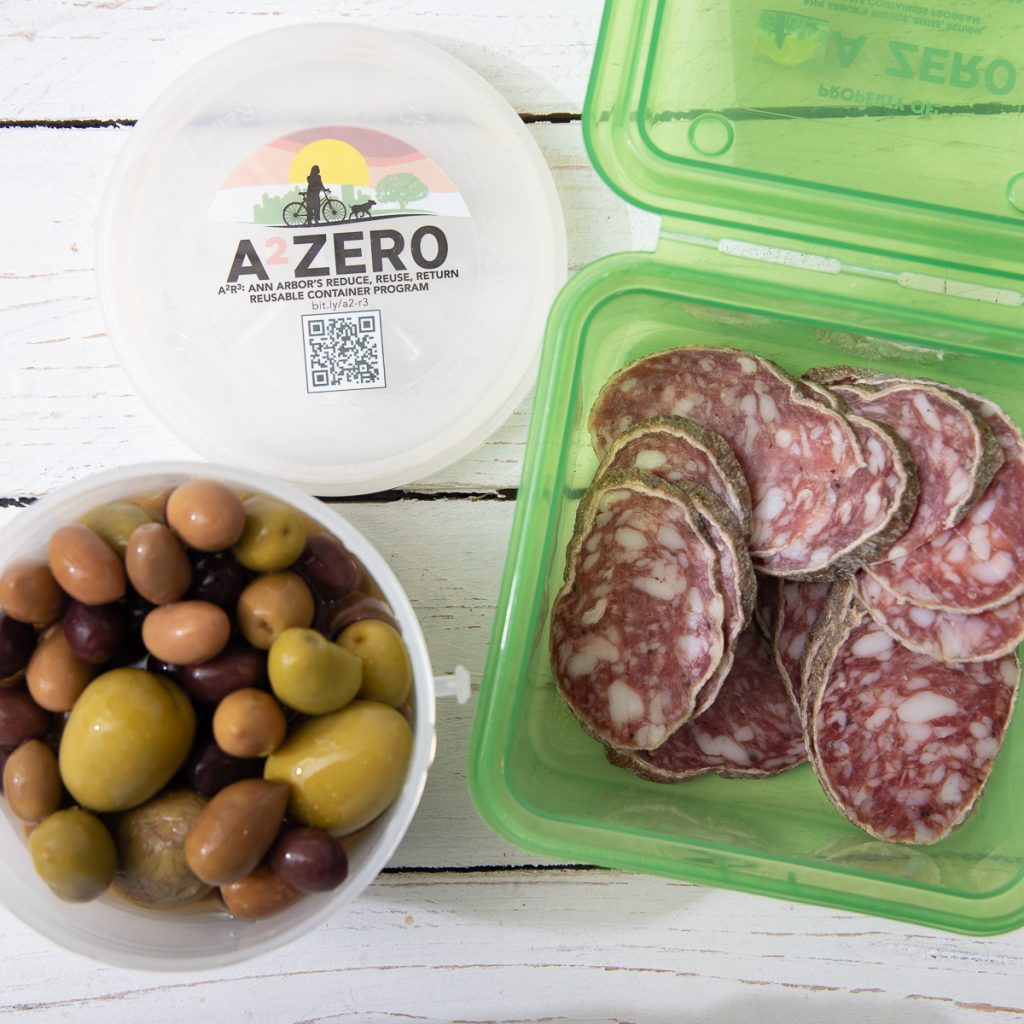
Our Purchasing Team works mainly out of the spotlight, like a small team of sustainable superheroes. But they deserve a shout-out, not only because they are a beautiful miracle, unbelievable—the Deli couldn’t run without them! This small team has a big role in securing everything the Deli needs. The team also does inventory counts, receives the products they’ve ordered (while making sure the correct amount comes in), and processes invoices into the inventory system. They’re keeping an eye on it all, and considering that the Deli has 5,000 SKUs (aka stock-keeping units), that is no small task. Not only is the Purchasing Team managing behind-the-scenes operations, but they’re also to thank for shifting our disposable items—like cutlery, deli containers, and clamshell packages—to more sustainable versions. (And, because we know even the best versions of disposables aren’t ideal, we pioneered a returnable takeout container program to reduce our dependence on disposable products in the first place.)
Another well-kept secret to our success is PARs. PAR stands for “periodic automatic replacement”; it’s the ideal minimum amount of a specific inventory item, and it’s how we know when to buy more and when we may have too much. The Deli kitchen uses PARs to determine how much food to make for the sandwich line. For example, the ingredients for popular sandwiches have a high PAR—think corned beef, Russian dressing, et cetera. We use inventory management (more on that in a minute) to track each ingredient, and we use historical sales data and sales forecasting to figure out our PARs. We plan ahead by paying attention to what weekends may be busier than others. Graduation or a home game at noon will create a very different weekend than one with an away game or a school break.
We also use standard operating procedures, or SOPs (nope, looks like you’re not OOTW—out of the woods—with acronyms yet), to do everything we can to avoid wasting food. We track all sorts of things: We use waste logs to help us see possible patterns and identify opportunities to improve. We’re constantly checking expiration dates and cooler temperatures. We go through process improvements with every recipe on a regular basis. We also teach all of these SOPs and go through a whole host of training with our staff; after all, we need all of us to be in the fight against unnecessary waste together! Along those same lines, we’re having conversations with our vendors as well to see how we can work together to minimize waste. Some local farmers will bring us their produce in reusable totes to cut down on the use of packaging that would otherwise be disposed of.
When it comes to ingredients, we’re big on cross-utilization. That means you won’t just find our corned beef on the #2 Zingerman’s Reuben; it’s actually a key component of seven other menu items. Having multiple menu items rely on the same ingredient means we’re more likely to be able to use the ingredient before it expires, and it streamlines purchasing. We also prefer to buy whole foods and do the processing in our kitchen, so we can get the freshest ingredients without waste. That’s why we don’t buy diced tomatoes or chicken pieces; instead, we buy whole tomatoes and whole chicken and break them down ourselves.
Inventory Management, Forever and Always
You were anxiously awaiting our promise to return to discussing inventory management, weren’t you? The time has come! We do a bimonthly inventory to get exact counts of all items—no small task with thousands of SKUs—which helps determine usage and, you guessed it, allows us to readjust PARs. (Just spitballing here, but you’ve caught on so quickly, maybe you want to come and work with us?) The physical inventory count is just one piece of inventory management, though.
You’ve likely heard of Lean management; it’s a set of methods designed to streamline production and reduce waste, the goal of which is the organizational equivalent of a well-oiled machine. We apply Lean principles to what we do in a variety of ways, from a drive for continuous improvement to using tools like Kanban. Kanban is a visual management system that uses cards, and, like Lean, it originated at Toyota. We use Kanban on the sandwich line to help us understand what we need; the cards help us visualize when something is almost out.
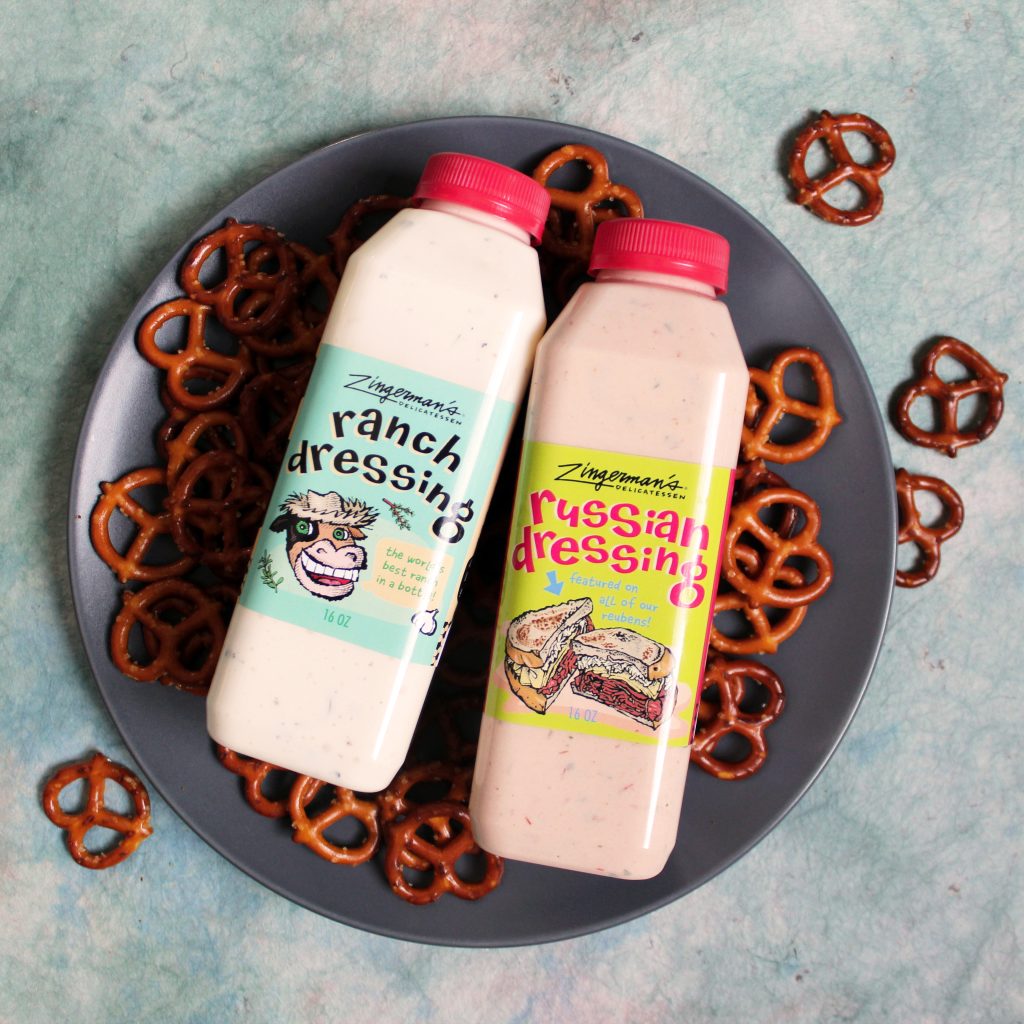
Let’s use Russian dressing as an example. The kitchen makes the Russian dressing and stocks the sandwich line with tubs of it. The number of tubs stocked is determined by available space and by how much dressing is expected to be used over a set period of time. The staffer on the line will use those tubs throughout the day, and the last tub will have a card on it. Someone will have a task during their shift to check the stock on sandwich line items. When they see that there is only one tub of Russian dressing with the card on it, that is their cue to get more dressing and restock that section.
Another key component of inventory management is first in, first out, or FIFO. (LWYMUD—look what you made us do, drop another acronym!) FIFO helps with proper storage and rotation, which in turn helps minimize waste. If we make a quart of ranch dressing on Monday, Tuesday, and Wednesday, the first quart used should be the one made on Monday.
All You Had to Do Was Stay: An Ode to Food Waste Recovery
We do as much as possible on the front end to try and avoid having excess food, but occasionally it happens. When it does, we have a trifecta of tricks up our sleeves to avoid that excess being wasted. The first is to offer discounts. Most of the time, the pastries and single-day breads (like baguettes) that we get from our partner business, Zingerman’s Bakehouse, sell out daily. If they don’t, we offer a discount on them after 5 p.m. We also offer a discount on day-old breads (tips on how to store and revive your bread are free!), and two-day-old bread is free for staff to take home and enjoy. Our second strategy is to find delicious ways to use foods that otherwise might go to waste. Day-old bagels become bagel chips, ready for swiping through pimento cheese. Chicken fat becomes schmaltz, ready to lend additional flavor to our matzo balls and chopped liver. And finally, we also donate to the Community Kitchen* at the Robert J. Delonis Center. Every Sunday, we bring 65 hot meals, and on the rare occasion that we have extra food during the week, we bring that over, too.
Long story short, we put a lot of work into reducing waste, and we’re able to do what we do in large part due to the collaborative efforts of others. We’re grateful to have passionate leadership that cares about this issue, committed staff working on it, dedicated partner businesses and community partners to help us, and support from our community and guests like you!
*The Community Kitchen at the Delonis Center was started in 2003 by Food Gatherers, a nonprofit food bank and food rescue program. Today, Food Gatherers is an independent nonprofit organization. But did you know that it was established in 1988 by Zingerman’s Deli?! That made Food Gatherers Michigan’s first food rescue program and the first one founded by a for-profit business!