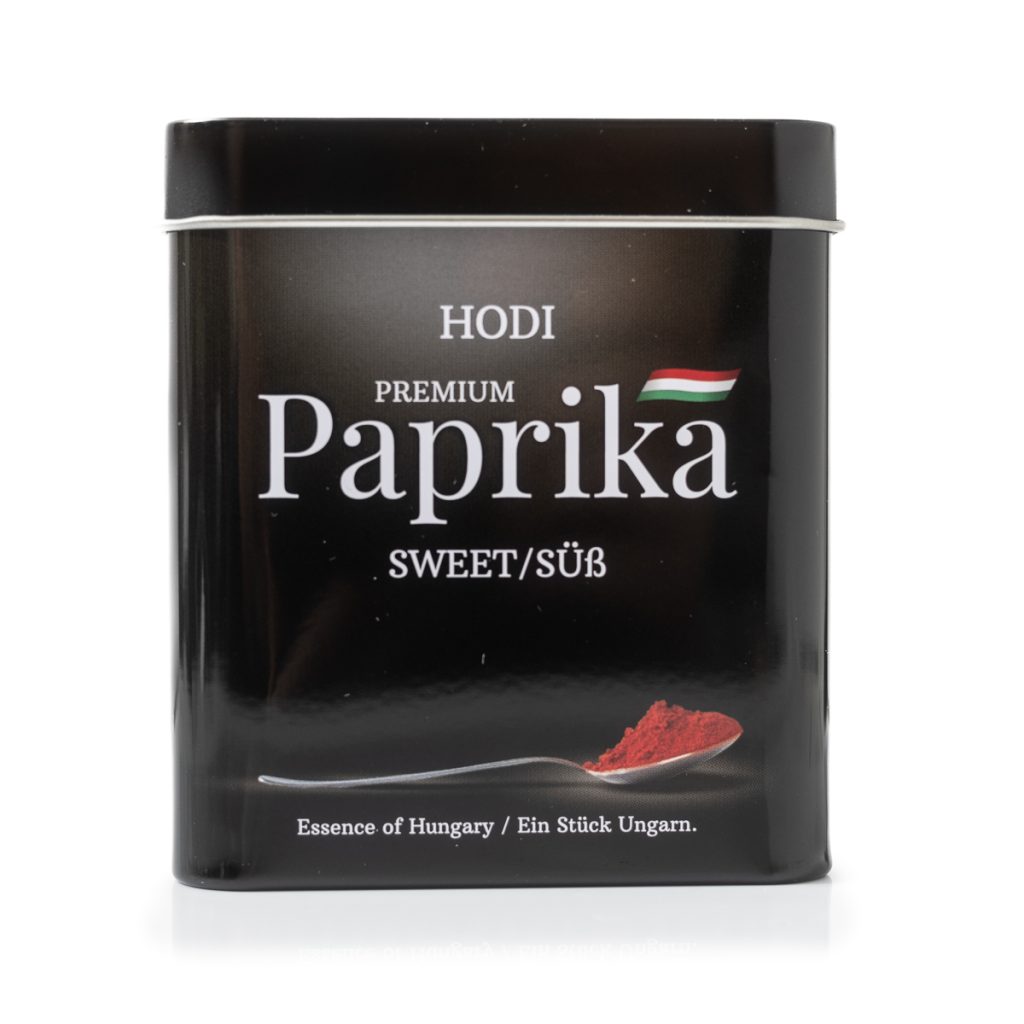
There’s a long-standing Hungarian saying that “a day without paprika is like a day without sunshine.” I’m glad to say that the sun has been out in force in Ann Arbor in the last few days, and happily, Hungarian farmstead paprika is on the shelves and in the kitchens at the Deli.
The very special spice comes to us from the Hodi family in the paprika-producing region of Szeged in the south of the country. Frank Carollo and Amy Emberling from the Bakehouse and I (along with my longtime friend, cookbook writer extraordinaire, Molly Stevens) visited them over 15 years ago now on our first visit to Hungary to begin learning about the food and baking of the country that, all these years later, has led to a whole range of flavorful offerings like Dobos Torta, Esterházy Torta, and the super tasty sweet bread, Somodi Kalács!
The Hodis, to my knowledge, are one of the only family producers left that have enough size and volume for us to get hold of their product but are still small enough that they process all their own peppers. They grow the peppers, ripen them fully in the field, dry them, and stone-grind them to make the paprika powder, which they then hand-pack. The flavor is far fuller and livelier than the standard commercial “Hungarian paprika” found on supermarket shelves. It is a dark fiery red, has an exceptional aroma, and an eye-opening pungency and depth. It’s not hot, but it is hugely flavorful!
Chile peppers, of course, came to Hungary from the Western Hemisphere. Paprika is often referred to by culinary historians as the “first democratic spice”—it was taken up first by poor Hungarians in rural areas, who adopted it primarily because they couldn’t afford the costlier options (like black pepper, nutmeg, or cinnamon) that were so highly prized by upper-class cooks. In good democratic fashion then, paprika worked its way “up” from the peasantry through the rest of society until, eventually, it was adopted by the Hungarian nobility that had originally ignored its arrival.
In 1859, the now famous Pfalfy brothers developed a machine that could remove stems and seeds from dried peppers. That helped make paprika even more widely available. But after 1945, landowners were forced by the Communist government into co-ops, and fresh produce was prohibited from being sold directly at farm markets. The small producers of paprika all disappeared or went “underground,” and quality levels of the spice dropped. When we visited Mr. and Mrs. Hodi, they told us stories about farmers coming to the market back then with matchboxes filled with paprika. People would pass the packet discreetly to potential customers who could sample it by smell or a small taste from the tip of their finger and then place an order to be delivered discreetly at a later date.
The Hungarian product is very particular, and not really interchangeable with the also delightful paprikas of, say, Spain. Its deep aroma and complex flavor are completely different, almost meaty in its taste. There’s another Hungarian saying that “one who has salt and paprika has all the spices necessary.” Paprika is ubiquitous in Hungarian cookery, used to add flavor, color, and depth to all sorts of dishes. “Every restaurant in Hungary, you see it on the table,” one Hungarian related to us during that initial visit. To give you a sense of how important it is, the average Hungarian family consumes about a kilo of paprika a year. Authentic Hungarian cooking is essentially impossible without it.
To release the full flavor of the paprika, it’s best to add it to hot fat (not too hot, though, or the sugars in the paprika will burn). The heat allows the full flavor of the paprika to bloom. Take note that paprika is also added at the end of the cooking and at the table, not just in the recipe preparation. You can put Hungarian paprika on potatoes, rice, fried eggs, toast, or salad. Sprinkle it onto deviled eggs or omelets, or onto pasta dishes. At the book event I did last week at the amazing Alma in Minneapolis, the marvelous chef, Maggie Whelan, sprinkled paprika atop Vermont Creamery Cultured Butter to make a quick, tasty, and visually compelling Paprika Butter. Hungarian restaurateur and writer George Lang describes the blend of lard, onion, and paprika as a “holy trinity.” Taking Lang’s point to heart, I love bits of fried bacon fat tossed with hot pasta and plenty of Hungarian paprika. You can, of course, make the pasta without the meat—the main point is only that tossing paprika with hot pasta and a bit of oil is an awesome and easy meal. I’ve taken to leaving a tin of the Hungarian paprika on my table at home so that I can add it at will.