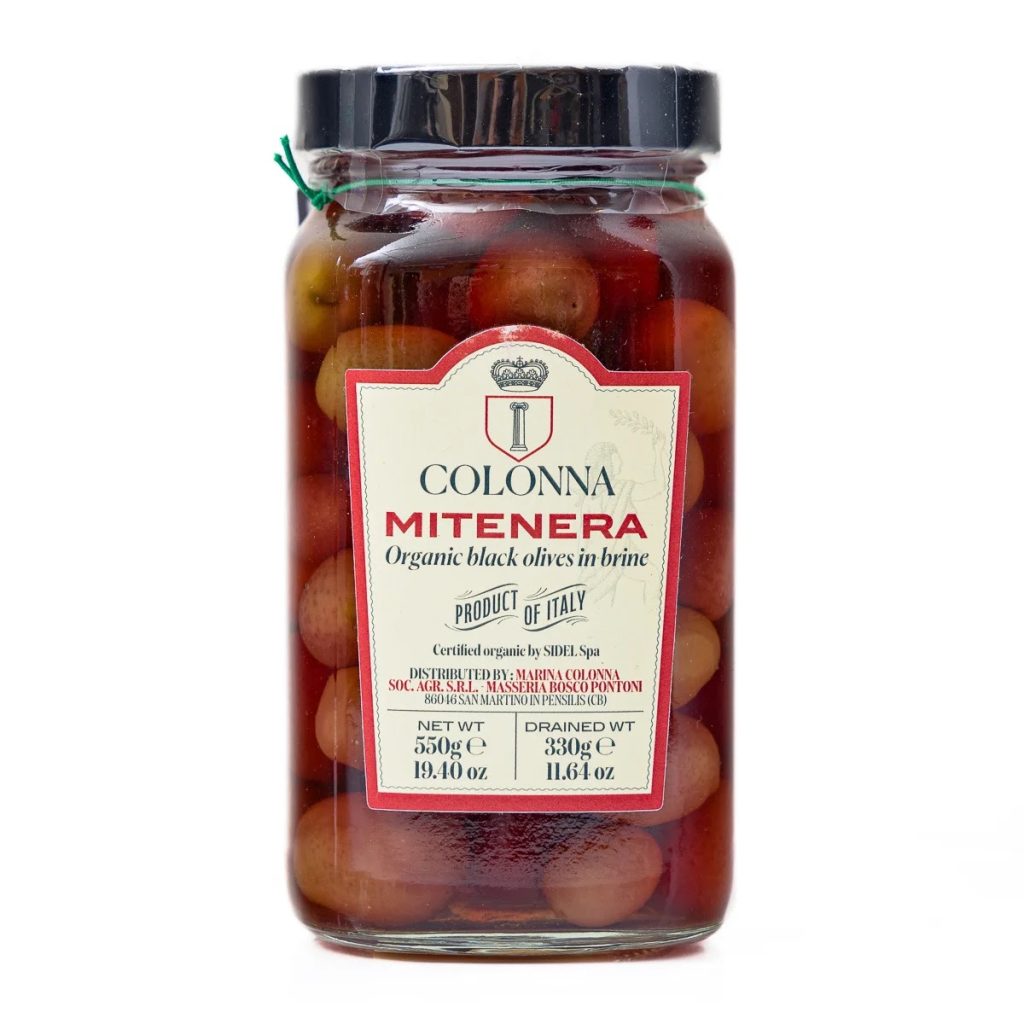
Compellingly crisp and tasty brown olives from Marina Colonnain Central Italy
Some of the tastiest, crispest olives I’ve had in the last 10 years, these are handpicked and traditionally cured on the ancient family farm of the Colonna family in the Italian region of Molise.
If you’re familiar with Molise, it could be considered the gateway to Southern Italy. Draw a line due east from Rome, stop about two-thirds of the way across the Italian peninsula, turn right (south), and you’ll be there. An old agricultural area, Molise has been producing olive oil in large quantities for millennia. It’s filled with big hills and smallish mountains. Olive trees grow up and down the hillsides, ash-colored trunks twisting gray off the ground, pale green leaves shining softly silver in the afternoon sun.
Marina Colonna, who runs the estate today, has a family tree that can be traced back to the popes of early Rome. The name Colonna means “column,” and the family crest, which is included on all their olive oil bottles and olive jars, is a Roman column. At the farm, Marina has framed parchment public notices from the 17th century laying out the work rules and prices for Rome’s butchers (macellerie) and grocers (alimentarie). In the library, she has more than a hundred bone-colored binders of family history dating back to the 10th century.
Even with her prestigious family history, Marina still works—and works hard. In Italy, title and lineage have long been disconnected from wealth, and olive oil is not a hobby here, nor is it a way to get rich quick. Selling a few thousand bottles of olive oil—and, in this case, some bottles of artisan olives—per year is not an easy way to make a living. It requires a commitment to craft, an eye toward the future, and the energy to turn out high-quality oil and near-perfect olives like these year in and year out. Marina has that commitment.
The olives in question are the Termite di Bitetto, one of four great organic olive varieties grown in Southern Italy. They’re hand-harvested between October and November, when they’re about halfway between green and black, then cured for about six months in traditional brine. Industrial supermarket olives, by comparison, are cured with lye in a matter of days. Round, plump, crispy, and meaty, these olives can be used in cocktails or served with just about anything from cheese to lamb chops. They’re excellent right out of the jar, too! Alternatively, you can take them out of the brine they’re in inside the jar and dress them with a little extra virgin oil (quadruple bonus points if you use Marina Colonna’s remarkable oil), a bit of peeled and bruised garlic, and some slivers of orange peel. And, of course, you can also add them to pasta sauces, salads, et cetera. Just be careful of the pits while you’re eating, or take a few extra minutes to pit the olives before you use them. Terrifically tasty, they’re a true culinary reflection of the region—a whole lot of work to produce but exceptionally easy to eat!