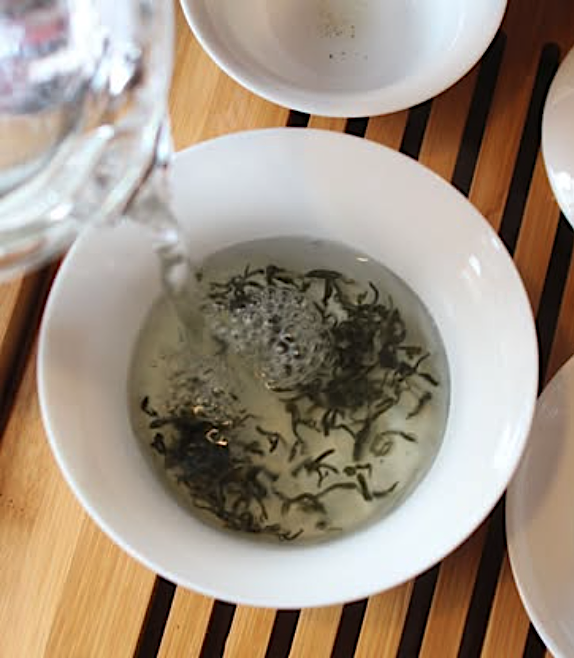
The first picking of the 2026 spring harvest arrives in Ann Arbor
This terrific, hard-to-find tea was harvested on April 1 this past spring, but don’t let the date deceive you—the First Flush Darjeeling from the Thurbo Tea Estate in India’s Darjeeling district is no joke!
In the “ABC of Zingerman’s Food Philosophy” that you’ll find in the pamphlet “A Taste of Zingerman’s Food Philosophy,” you’ll see this superfine tea under “D”:
D is for Darjeeling. More specifically, First Flush Darjeeling. This is the very limited supply of Darjeeling tea that comes from the first harvest of the spring season each year. … To this day, First Flush Darjeeling remains one of my favorites of all the fine foods we sell, and each spring I wait eagerly for the new season’s arrival.
The 2026 First Flush tastes like no other—one that evokes emotion, calls up my creative spirit, and comforts me all at the same time. If, as author and poet Chitra Banerjee Divakaruni writes, “each day has a smell,” today, for me, it’s the aroma of the 2026 First Flush.
Even before it’s been brewed, the fragrance is enticing: fresh, lively, aromatic, and hard to walk away from—I keep sticking my nose back in the bag to get just one more sniff before I head off to do other things. When the tea is brewed, it gets even better still.
We start our selection process each year by tasting a range of samples from different gardens, or estates. For the last few years, Jackson Konwinski, tea buyer at Zingerman’s Deli, has ably led the work. How does he do it? He explains:
Selection for me involves tasting the different offerings next to each other, always with two steepings to see how the tea evolves. I look for a tea that has some of the classic Darjeeling flavor notes (citrus, spice, brisk finish) but that brings something extra and unique to the table. This year, it was the flowery nose and other fruits on the palate. I also insist on a tea that re-steeps well. Teas that were in the running after the first infusion have been pushed aside when the second steep fell flat.
This year, we really liked the tea from the Thurbo Estate. The name “Thurbo” is a variation of the Nepali word tombu, meaning “tent”; the British set up tents in this area when fighting the Nepalese in 1870. Thurbo runs near the Nepali border in the west of the Darjeeling region, just outside Mirik. With the Mengli River to the north of the estate and the Rangbag River to the south, the tea plants at Thurbo grow at altitudes ranging from 3,000 to 8,000 feet. Higher altitudes generally mean the plants work harder to grow and the tea leaves that come from them are more flavorful, and this lot is selected from the leaves picked at the highest altitudes in the garden. The tea is certified organic, and all of the harvesting and oxidation work to make the tea is traditionally done by hand—what’s known in the trade as “orthodox production.” Something like 11,000 shoots are hand-plucked to make a pound of good tea.
Thanks to Kevin Gascoyne and his colleagues at Camellia Sinensis, our longtime tea importer in Montreal, we’ve been able to get our hands on a tea that is, literally, superfine—a light amber in color, with a delicate, nutty flavor enhanced by a lovely bit of tannin and hints of apricot and white mulberries. There’s a particular taste of the terroir where the Thurbo Estate is located that’s known to bring a rose flavor that “cannot be replicated anywhere else in the entire Darjeeling hills.”