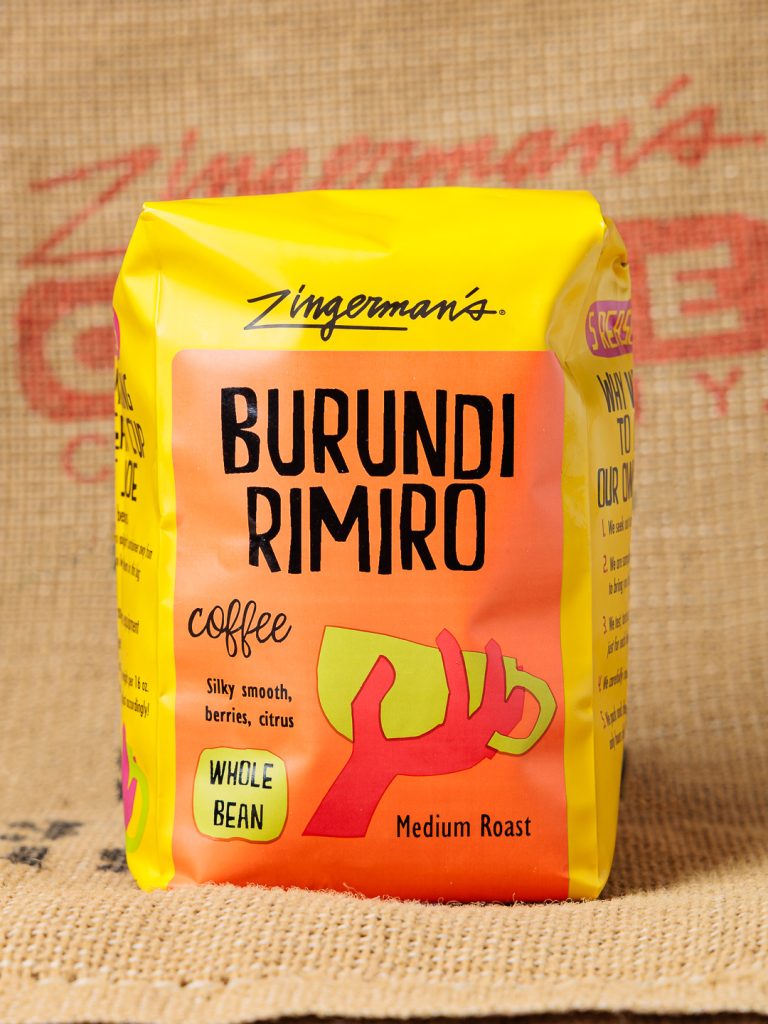
A beautifully smooth cup from the mountains of Central Africa
If you check the world rankings by coffee production volume, Burundi lands 29th—the tiny East African country contributes just 0.2% of the world’s beans. But shift the filter to quality, and Burundi jumps straight into the top 10. The country is producing some of the tastiest cups around. The Burundi Rimiro we’ve got as Coffee of the Month is so delicious, I’ve been happily drinking it every day.
Burundi, in case you’re not already familiar, is a small East African country that was an independent kingdom for 500 years before falling under German colonial rule in 1887. The Belgians took control after the First World War. Fortunately, Burundi regained independence in 1962. Coffee was originally introduced into the country by Belgian colonists—typically with the same painful legacy that came with colonial cash crops in so many countries. The memory of that experience still lingers. One elderly Burundian farmer, now in his 80s, shares,
I started growing coffee when Burundi was still colonized by Belgians. During that time growing coffee was very different compared to today. … Although I started cultivating coffee by force, I didn’t stop when the Belgians left the country because I realized that what they had told us was true. I have seen the benefits of the coffee crop in my family’s life. When I’ve gotten money from coffee, I’ve paid for school fees, brought clothes and paid my workers. I will cultivate for the rest of my life.
This particular Burundi for the Roasters’ Pick is a collection of naturally processed, or dry processed, coffee cherries from Ngozi province, in the north of the country, near the border with Rwanda. Natural process coffees like this are nearly always the ones I favor most. Making natural process coffee is harder—the fresh coffee cherry is dried with the soft, pulpy, sweet fruit still attached—but the results are much bigger in flavor.
The farms that grow the coffee are all quite small—two or three hundred coffee trees each. With only about three pounds of coffee cherries annually per tree, that means that each farm produces only about 1000 pounds of fresh fruit, which eventually translates into around 100 pounds of roasted coffee.
The new Burundi has been pretty darn terrific any way I’ve tried it. The Coffee Company crew says, “We love this for its silky smooth texture and bouquet of fresh fruit flavors that remind us of berries and citrus.” Very tasty right out of the big batch urn we brew in at the Coffee Company and the Roadhouse. If you want to take the flavor up a couple notches, come out to the Coffee Company and have it done up in one of the other methods on the Big Brew Board. It is really good as an iced pourover—the same flavors are still there, but they’re brought more to the fore. More tart fruit—maybe cranberry? Apricot? A bit of citrus. The AeroPress is mouthwatering, with a lot of depth and complex, gentle flavor. The Burundi is especially excellent as an espresso—really nutty, lots of roundness in the flavor, high notes with a happy finish, maybe a smidgen of toasted sesame.